Los Angeles EV Lemon Law Lawyer
California’s lemon law covers electric vehicles the same way it covers any other car. If your EV has a substantial defect that the manufacturer cannot fix after a reasonable number of attempts, you have the right to demand a full refund or a replacement vehicle. A Los Angeles EV lemon law lawyer can review your repair history and tell you whether your claim is worth pursuing.
Need Assistance With Your Case? Get a Free Case Review.
If you find yourself on the wrong side of the law, let us put our knowledge and experience to work for you.
📞 Call Big Joe NowCalifornia’s Lemon Law Changed in 2024 and 2025. EV Owners Need to Act Faster Now.
The deadline to file a lemon law claim used to be four years from the date the defect first occurred. That window is now significantly shorter. Under current law, you have one year from the date your express warranty expires to file a lawsuit, and no more than six years from the original delivery date of the vehicle. You also have to send the manufacturer written notice and give them 60 days to respond before you can file.
These deadlines apply to every EV brand. Tesla, Rivian, Lucid, Ford, Chevy, Hyundai, Kia, every one of them. If your vehicle has been back to the service center for the same problem more than once, do not wait to talk to a Los Angeles EV lemon law attorney.
Can I Sue an EV Manufacturer Under California’s Lemon Law?
Yes. The Song-Beverly Consumer Warranty Act does not distinguish between gas-powered vehicles and electric ones. The law covers any new vehicle purchased or leased in California, including battery electric vehicles, plug-in hybrids, and hydrogen fuel cell vehicles, as long as the defect occurred while the vehicle was under the manufacturer’s warranty.
Electric vehicles are not held to a different standard, and they are not given extra grace because the technology is newer. If your EV has a defect that substantially impairs its use, safety, or value, and the manufacturer’s authorized service center has failed to fix it, the law treats that the same as a transmission that keeps slipping in a gas-powered truck.
Los Angeles is the largest EV market in the country. California accounts for roughly 35 percent of all electric vehicle registrations nationwide. More people in this city drive EVs than anywhere else in America, and that means EV lemon law claims here are not unusual, not novel, and not difficult to pursue with the right attorney.
What EV Defects Qualify for a Lemon Law Claim in Los Angeles?
Electric vehicles fail differently than gas cars. There is no engine oil, no transmission fluid, no timing belt. But the list of things that can go wrong is long, and some of the defects that appear in EV lemon law cases are serious.
Battery problems are the most common. Your battery is the engine, the fuel tank, and the fuel all at once. When it fails, you don’t have a car. The most common battery defects that support a lemon law claim include:
- Premature range loss: significant capacity reduction well beyond what normal wear would explain, leaving you with substantially less range than the manufacturer’s warranty promised
- Charging failure: the vehicle will not accept a charge, stops mid-charge, overheats during charging, or cannot charge at certain speeds
- Battery management system errors: software controlling the battery reports incorrect range, shuts the vehicle down unexpectedly, or generates persistent warning codes
- Battery fire risk or thermal runaway: the most serious category, treated as a safety-critical defect that may require only two failed repair attempts to support a claim
Beyond the battery, EV-specific defects that appear regularly in California lemon law cases include:
- Software failures affecting core vehicle functions: not slow-loading apps, but software that controls braking, acceleration, steering, or regenerative braking, and that malfunctions in ways that affect safety or drivability
- Electric motor defects: loss of power, unexpected shutdowns, or acceleration failures during highway merges on the 10 or the 110
- Regenerative braking failures: erratic braking behavior or complete loss of regenerative function
- Charging port defects: ports that fail to connect, lock, or release, leaving you stranded at a charging station in Culver City or unable to plug in overnight in the Valley
- Driver assistance and autonomous feature malfunctions: phantom braking, failure to maintain lane, false collision alerts, or sudden disengagement at highway speeds
- Infotainment and display system failures: screens that control climate, navigation, camera feeds, and other core functions, when those failures affect safety or the vehicle’s usable value
- HVAC failures: climate control systems that stop working entirely, which matters considerably more during a heat advisory in the San Fernando Valley than manufacturers tend to acknowledge
Any of these defects can support a lemon law claim if they are substantial, covered by warranty, and have persisted despite the manufacturer’s repair attempts.
Do Software Updates Count as Repair Attempts Under California’s Lemon Law?
Yes. This matters a great deal for EV owners, because EV manufacturers use over-the-air software updates as their default response to a wide range of complaints. You report a problem, they push an update remotely, and they mark the issue resolved.
Each update counts as a repair attempt. If your manufacturer has pushed three or four software patches for the same underlying problem and the issue still occurs, that history counts toward the legal threshold for a lemon law claim. The manufacturer cannot sidestep accountability by delivering fixes wirelessly instead of at a service center.
There is an important distinction, though. Software genuinely can fix software defects. If a software update resolves the problem entirely and it does not return, that update did its job. The issue arises when the underlying cause is hardware, and the manufacturer keeps trying to mask it with software patches. Battery hardware failures do not get fixed by firmware. Motor defects do not get fixed by code. If you have received multiple updates for the same problem and the problem keeps coming back, a Los Angeles EV lemon law attorney needs to see your documentation.
Which EV Brands Does California’s Lemon Law Cover?
All of them. There is no exception for new brands, no grace period for manufacturers still working out production issues. The law applies equally to:
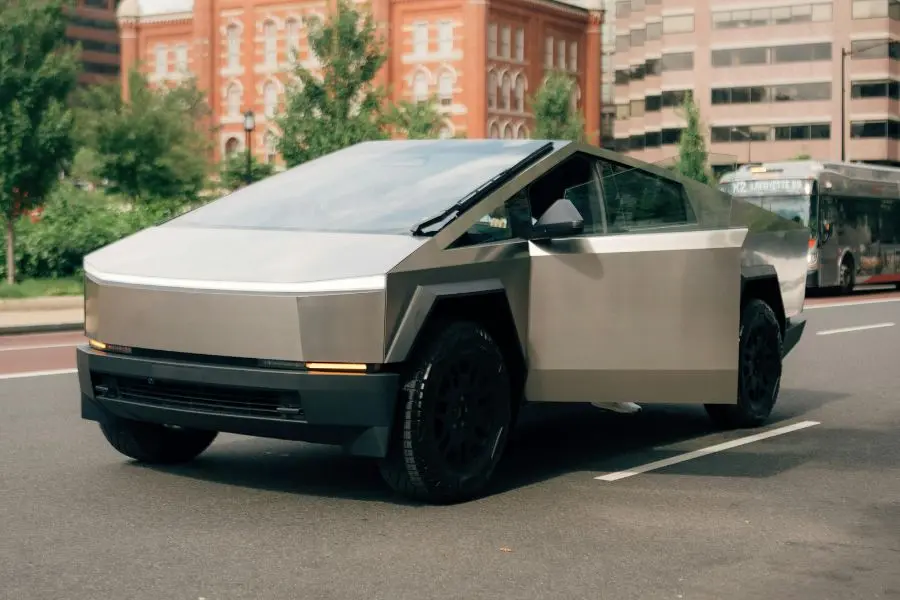
- Tesla (Model 3, Model Y, Model S, Model X, Cybertruck)
- Rivian (R1T, R1S)
- Lucid (Air sedan)
- Ford (Mustang Mach-E, F-150 Lightning)
- Chevrolet (Bolt EV, Equinox EV, Blazer EV, Silverado EV)
- Hyundai (IONIQ 5, IONIQ 6)
- Kia (EV6, EV9)
- BMW (i4, iX, i5)
- Mercedes-Benz (EQS, EQE, EQB)
- Volkswagen (ID.4)
- Honda (Prologue)
- Cadillac (Lyriq)
- GMC (Hummer EV, Sierra EV)
- Polestar, Genesis, Volvo, and any other EV brand with vehicles sold or leased in California
Being a newer company does not reduce your liability under California law. Being a technology company rather than a traditional automaker does not reduce it either. If you purchased or leased the vehicle in California and the manufacturer cannot fix a substantial defect, you have a claim.
How Many Times Does the Manufacturer Have to Fail Before My EV Qualifies as a Lemon?
Fewer than most people expect.
For defects that are serious enough to cause death or injury, two failed repair attempts may be enough. That category includes battery fire risks, brake failures, sudden loss of power at highway speed, and autonomous feature malfunctions that create unsafe driving conditions.
For other defects, the general threshold is four repair attempts for the same problem without resolution. You can also qualify if your vehicle has been out of service for warranty repairs for a combined total of 30 or more days, even if those days were spread across multiple visits. A week at the Tesla service center on Centinela, two weeks waiting on a Rivian mobile service appointment, a few days at a Ford dealer in Glendale: those all count toward the total.
These thresholds create the legal presumption that your vehicle is a lemon. You don’t necessarily have to meet them to pursue a claim, but meeting them strengthens your position considerably.
How Long Do I Have to File an EV Lemon Law Claim in Los Angeles?
Your deadline is one year after your vehicle’s express warranty expires. No exceptions. There is also an outer limit of six years from the original delivery date of the vehicle, regardless of what the warranty says.
EV warranties are structured differently than gas car warranties. There is typically a basic vehicle warranty covering four years or 50,000 miles, and a separate battery and drive unit warranty that lasts much longer, often eight years or more. The one-year post-expiration deadline applies to each applicable warranty separately. A battery defect claim has a different expiration date than a defect claim covered by the basic warranty.
Before filing a lawsuit, you have to send the manufacturer written notice of your claim and give them 60 days to respond. If they fail to make a reasonable offer during that window, you can proceed with litigation.
Get your documentation together now. Pull every service record, every written communication with the dealership or service center, every screenshot of warning messages, and every note you made after a problem occurred. The strength of a lemon law case is built on records, and the sooner you start organizing them, the better.
What Compensation Can I Recover in a Los Angeles EV Lemon Law Case?
Electric vehicles are expensive. A base Model Y starts in the mid-forties. A Rivian R1S runs $70,000 or more. A Lucid Air pushes well past six figures. The high purchase price of most EVs means the potential recovery in a lemon law case is substantial.
Here is what California’s lemon law allows you to recover:
- Full refund of the purchase or lease price: down payment, all monthly payments made, and in a lease, associated fees
- Taxes, registration fees, and finance charges: everything you paid at the time of purchase and throughout the loan
- Incidental costs: rental cars, rideshares, or tow charges you paid because of the defect
- Civil penalties: up to twice your actual damages if the manufacturer’s failure to repair, replace, or repurchase was willful
- Attorney’s fees and costs: the manufacturer pays your legal fees when you win, which means pursuing a lemon law claim through our firm costs you nothing out of pocket
The civil penalty provision is significant on high-value vehicles. If you paid $80,000 for an EV and the manufacturer willfully failed to honor their obligations, your total recovery can reach well into the six-figure range. EV manufacturers know this. Their goal is to delay, offer low, and hope you move on. Our EV lemon law attorneys in Los Angeles know this playbook.
Does It Matter If My EV Is Still Under Warranty When I File?
Yes, but not in the way most people think. The defect needs to have first appeared while the vehicle was under the manufacturer’s warranty. You do not have to file the claim while the warranty is still active. The law gives you until one year after the warranty expires. What you cannot do is file a claim based on a defect that first appeared after warranty coverage ended.
For EV battery claims, this distinction matters. A battery that starts showing significant range loss in year three of an eight-year battery warranty is still well within the coverage window. Document the degradation as it occurs. Get the battery tested at an authorized service center and get the results in writing. That documentation is what proves when the defect first appeared and whether the manufacturer had a reasonable opportunity to fix it.
How Our Los Angeles EV Lemon Law Attorneys Can Help You
EV manufacturers are not small companies with limited legal resources. They have dedicated warranty defense teams whose entire purpose is to deny, delay, or minimize what they owe consumers. They will cite normal wear and tear, argue that software updates resolved the issue, question whether your defect actually meets the legal threshold for substantial impairment, and use arbitration clauses where available to keep the dispute out of court.
Our lemon law attorneys in Los Angeles know how each of these arguments works and how to counter them. Our Los Angeles lemon law lawyers know how to document OTA update patterns, how to prove that a software patch did not fix a hardware problem, and how to build a repair history that satisfies California’s legal requirements.
Here is what working with our team means for you:
- Full case evaluation: Our Los Angeles EV lemon law lawyers will review your repair records, warranty documentation, update history, and purchase or lease agreement at no charge
- Written notice preparation: Our Los Angeles EV lemon law lawyers handle the mandatory pre-suit notice to the manufacturer and manage the 60-day response period
- Negotiation: Our Los Angeles EV lemon law attorneys deal directly with the manufacturer’s legal team to pursue the refund, replacement, or settlement you are actually owed
- Arbitration guidance: if your purchase agreement includes an arbitration clause, we advise you on whether arbitration or litigation is the stronger path
- Litigation: if the manufacturer refuses a fair resolution, we file and take the case as far as it needs to go
- No upfront costs: we handle EV lemon law cases on contingency, and the manufacturer pays our fees when you win
You paid a significant amount of money for a vehicle that was supposed to represent the best of what modern automotive technology can do. When it doesn’t work, and the manufacturer can’t fix it, California law is clear about what happens next.
Talk to a Los Angeles EV Lemon Law Lawyer at Big Joe Law
Your EV has a defect. The manufacturer has had their chances. Big Joe Law represents Los Angeles electric vehicle owners who are done waiting for repairs that never hold. Contact us today for a free consultation and find out what your claim is worth under California law.
Need Assistance With Your Case? Get a Free Case Review.
If you find yourself on the wrong side of the law, let us put our knowledge and experience to work for you.
📞 Call Big Joe Now