


Yes. But proving it is harder than most people expect.
Food poisoning cases aren’t like a slip and fall where there’s a wet floor and a witness. The evidence is biological, time-sensitive, and easy to dispute. Restaurants rarely admit their food made you sick. And the window to preserve what you need closes fast.
This post covers what a food poisoning lawsuit in California actually requires, what makes these cases difficult, and when calling an Encino personal injury lawyer is the move that changes the outcome.
Need Assistance With Your Case? Get a Free Case Review.
If you find yourself on the wrong side of the law, let us put our knowledge and experience to work for you.
📞 Call Big Joe NowWhy Restaurants Fight Food Poisoning Claims So Hard
A restaurant that admits its food caused an outbreak faces more than one lawsuit. It faces a health department investigation, potential closure, and a reputation that doesn’t recover easily in a neighborhood like Encino where word travels fast.
So they don’t admit it. Ever. Not voluntarily.
Their first argument is always causation: how do you know it was our food? You ate somewhere else that day. You touched a door handle. You have no proof it was the salmon. That argument works surprisingly often — because most people don’t do what’s necessary in the first 24 to 48 hours to lock down the evidence that counters it.
The legal standard requires you to prove the restaurant’s food caused your illness. Not might have. Not probably did. That it did — more likely than not, under California’s preponderance of evidence standard.
What California Law Says About Food Safety and Restaurant Liability
Restaurants in California have a legal duty to serve food that is safe to eat. That duty comes from multiple directions at once.
California Health and Safety Code Section 113700 and the broader California Retail Food Code set the standards for food handling, storage temperatures, cross-contamination prevention, and employee hygiene. A violation of those standards is evidence of negligence.
Beyond negligence, California recognizes strict product liability for contaminated food. Under that theory, you don’t have to prove the restaurant was careless. You have to prove the food was defective — meaning it contained a harmful substance — and that it caused your injury. A restaurant that served contaminated food can be liable even if it followed every procedure correctly.
That distinction matters. Strict liability is a stronger theory for plaintiffs. Our Encino personal injury lawyers evaluate both angles in every food poisoning case.
The Evidence Problem — and Why the First 48 Hours Matter
Here’s the part most people miss entirely.
By the time you’re sick enough to consider a lawsuit, you’ve probably already lost some of your best evidence. The food is gone. The kitchen has been cleaned. The batch of ingredients that made you sick has been used, discarded, or rotated out. If other diners got sick from the same meal, you may not know it yet.
What you still have — if you act fast — is your own body. A stool sample tested within the first 48 to 72 hours can identify the specific pathogen: Salmonella, E. coli, Listeria, Campylobacter, norovirus. That test result is the single most important piece of evidence in a food poisoning case. It tells your Encino personal injury lawyer exactly what made you sick and links your illness to a specific biological agent.
Save your receipt. Take photos of anything you still have from the meal. Write down exactly what you ordered, when you ate, and when symptoms started. The incubation period for different pathogens varies — Salmonella hits in six to 48 hours, norovirus in 12 to 48, E. coli sometimes longer. That timeline helps establish which meal was the source.
If you went to urgent care or the ER, those records are critical. A treating physician’s documentation of your symptoms, diagnosis, and any lab work done at the time is evidence the restaurant’s lawyers can’t easily dismiss.
What Makes a Food Poisoning Case Strong Enough to Pursue
Not every upset stomach becomes a viable lawsuit. The cases worth pursuing share a few characteristics.
The illness was serious. Hospitalization, IV fluids, a confirmed bacterial or viral diagnosis, significant lost time from work — these are the markers of a case with real damages. A 24-hour stomach bug with no medical treatment is genuinely difficult to litigate.
The source is traceable. A positive stool culture identifying a specific pathogen is the foundation. Even better: multiple people who ate at the same restaurant around the same time reported the same illness. Health department complaints from other diners create a pattern the restaurant can’t explain away as coincidence.
There’s documentation. Medical records, receipts, photos, written accounts of symptoms and timeline. The more contemporaneous the documentation — meaning recorded at the time, not reconstructed months later — the stronger the case.
The damages are real and calculable. Medical bills, lost wages, ongoing symptoms, and in serious cases, long-term complications from the infection itself. Certain strains of E. coli can cause kidney damage. Listeria is dangerous enough to cause miscarriage. These aren’t minor inconveniences — they’re life-altering injuries.
Who Else Might Be Liable Beyond the Restaurant
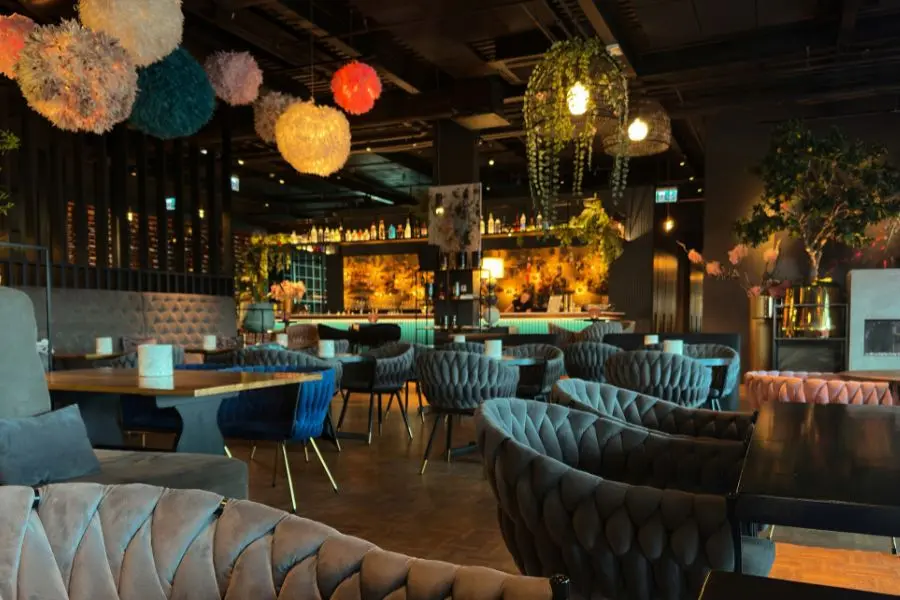
The restaurant is the obvious defendant. It isn’t always the only one.
Food poisoning cases sometimes trace back further than the kitchen. A contaminated ingredient from a distributor. A supplier who shipped produce with a known pathogen. A food manufacturer whose product was part of a wider recall that the restaurant hadn’t acted on yet.
California product liability law allows claims against every party in the chain of distribution — manufacturer, distributor, retailer. If the contamination happened before the food reached the restaurant’s kitchen, the supplier may carry significant liability.
This matters practically because it means more potential defendants, larger insurance policies in play, and more pressure on everyone to settle rather than litigate. Our personal injury lawyers in Encino trace the supply chain in serious food poisoning cases — not just the restaurant that served the meal.
What You Can Recover in a California Food Poisoning Lawsuit
Economic damages are straightforward: medical bills, emergency room costs, lost wages, any ongoing treatment required because of the infection.
Non-economic damages are where the case gets more interesting. Significant pain and suffering, extended illness, hospitalization, or long-term complications from a serious bacterial infection — these carry real value in California courts. Jurors understand what it means to be seriously ill from food a restaurant served you.
In cases involving particularly egregious conduct — a restaurant that knew about a contamination issue and kept serving anyway, or one with a documented pattern of health code violations — punitive damages may be available under California Civil Code Section 3294.
Our Encino personal injury lawyers assess the full picture before advising on value. A case with a hospital stay, a confirmed Salmonella diagnosis, two weeks of missed work, and a restaurant with prior health department violations is worth significantly more than the medical bills alone.
What the Health Department Investigation Means for Your Case
If you reported your illness to the Los Angeles County Department of Public Health — or if enough people got sick that the health department opened its own investigation — that process can generate evidence you couldn’t get on your own.
Health inspectors have authority to enter the kitchen, pull records, test food samples, and interview staff. Their findings become public record. A health department report documenting temperature violations, improper storage, or confirmed pathogen presence in the restaurant’s kitchen is powerful evidence in a civil lawsuit.
Report your illness. Even if you’re not sure you want to pursue a case, file a complaint with LA County Public Health. It creates a record, triggers an investigation that may uncover evidence, and protects other diners from the same thing happening to them.
FAQ: Suing a Restaurant for Food Poisoning in Encino
- How do I prove the restaurant’s food made me sick and not something else? A positive stool culture identifying a specific pathogen is the strongest proof. Combine that with your receipt, the timing of your symptoms relative to when you ate, and any other diners who reported the same illness from the same restaurant. The more data points you have, the harder it is for the restaurant to argue the source was something else.
- What if I didn’t go to the doctor? It makes the case harder but not impossible. Without medical records documenting your illness, you’re relying on your own account of symptoms — which is easier to dispute. If you’re still sick, go now. If you’ve recovered, document everything you remember in writing while it’s fresh and call an Encino personal injury lawyer to assess what you have.
- What if other people got sick at the same restaurant? That’s significant. Multiple victims with the same symptoms, from the same restaurant, around the same time creates a pattern that strongly points to a common source. Find out if anyone else at your table or anyone who ate there recently reported similar symptoms. Check Yelp reviews. File a complaint with LA County Public Health so they can investigate.
- How long do I have to file a food poisoning lawsuit in California? Two years from the date you were injured — which is typically the date you became ill. If a government-operated facility was involved, the timeline is shorter. Don’t assume you have time to spare. Evidence disappears fast in these cases.
- What if the restaurant has already been cited by the health department before? Prior violations are relevant and potentially powerful. A pattern of health code violations — especially ones related to food handling or temperature control — supports the argument that the restaurant was operating negligently. Our personal injury lawyers pull inspection history as part of the initial case evaluation.
Talk to Big Joe Law Before the Evidence Disappears
Food poisoning cases move fast or they fall apart. The pathogen in your system won’t be detectable much longer. The kitchen has already been cleaned. Other diners who got sick are making decisions right now about whether to come forward.
Big Joe Law represents personal injury victims in Encino and across Los Angeles. If you got seriously ill after eating at a local restaurant, call our personal injury lawyers today — before the window to build your case closes.
Need Assistance With Your Case? Get a Free Case Review.
If you find yourself on the wrong side of the law, let us put our knowledge and experience to work for you.
📞 Call Big Joe Now